
The short version
- Often losing things you need, like keys, wallet, phone or paperwork, is one of the official signs of ADHD.
- A review of 38 studies found adults with ADHD do less well on working memory, which holds “I just put it here”.
- Things usually get lost in the moment of putting them down while thinking about something else.
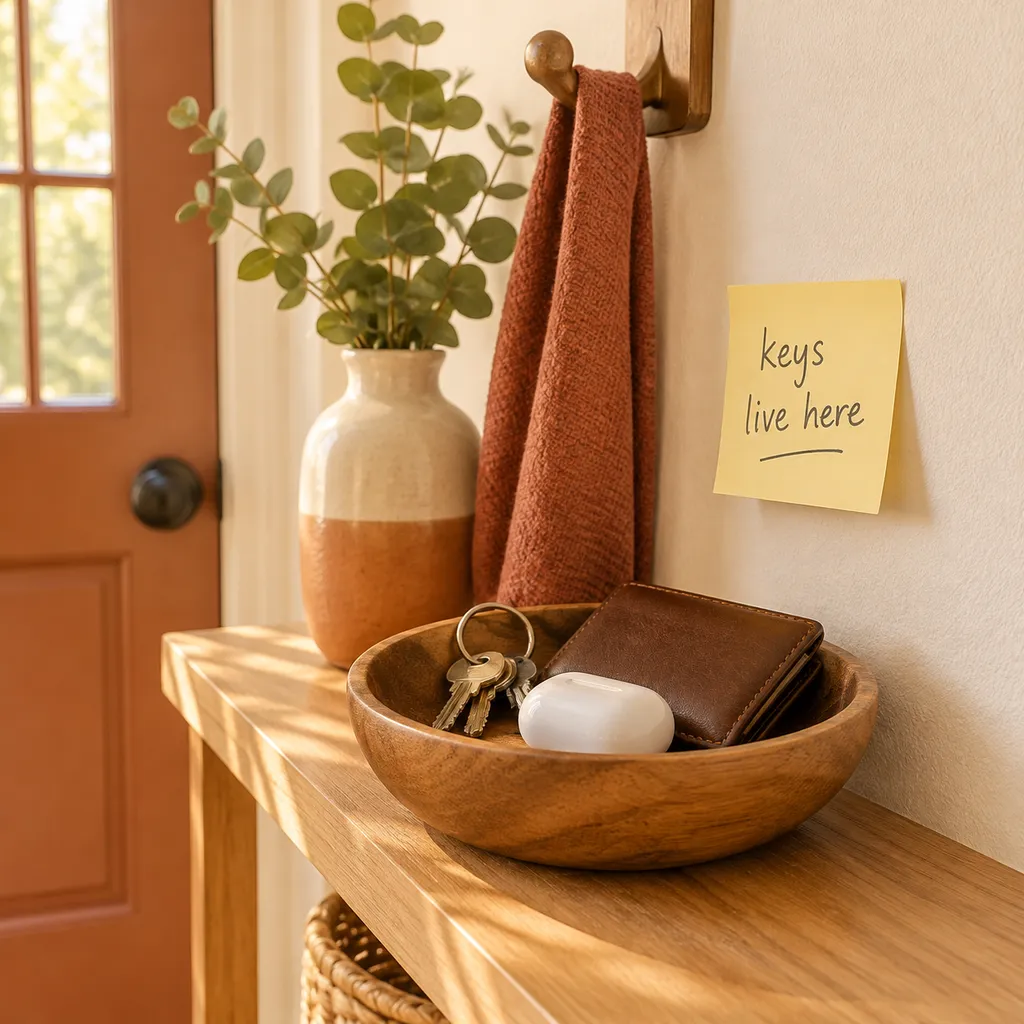
- One fixed home for each important object works better than trying to remember harder.
Ten seconds ago it was in your hand
You had your phone. You were holding it while you looked for your keys. Now you have your keys and no phone. You call it from the landline, and it’s in the fridge.
Sound familiar?
Adults with ADHD often describe losing things as a daily tax on time and mood. Ten minutes looking for keys before every trip, buying a third phone charger, replacing glasses, a bank card frozen and unfrozen twice in a month. Many also describe the anger that comes with it, mostly at themselves.
Maybe you also know these:
- You find things in strange places: the remote in the bathroom, the keys in the fridge.
- You put something “somewhere safe” and never see it again.
- You pat all your pockets every time you leave the house.
- You lose a thing while you’re holding it, or wearing it on your head.
If that sounds like you, you’re far from alone. It’s not carelessness.
Why things go missing
The research bitIt’s on the official list
The US National Institute of Mental Health lists “often loses things”, like school supplies, keys, wallet, phone or glasses, as one of the signs of inattention in ADHD [1]. On its own it doesn’t mean ADHD. Together with other signs, it’s part of the picture.
The research bitWorking memory
A meta-analysis of 38 studies found that adults with ADHD do less well than adults without ADHD on working memory tasks [2]. Working memory holds small facts for a short time, like “I just put the keys on the bookshelf”.
Most things get lost in one moment: you put them down while your mind is on something else. No attention went to that moment, so there’s no memory of it. Looking harder later doesn’t help, because the information was never saved.
Habits that make it rarer
Try this
- One home per important object. A bowl by the door for keys and wallet, a hook for the bag, a charger in one fixed place. If it’s not in its home, it’s in your hand.
- Say it as you put it down. “Keys, bookshelf.” It takes a second, and it gives the moment the attention it was missing. See talking to yourself.
- Make the important things loud. Bright keyrings, a coloured phone case, a glasses case in red. Easy to spot is easy to find.
- Use trackers on the two things you lose most, often keys and wallet.
- Keep spares of cheap essentials: a charger in the bag, reading glasses in the car.
- Check at the door. One short phrase every time you leave: “phone, keys, wallet”. Write it on a note by the door if needed.
For the wider version of this, piles you can see and things in drawers that vanish, read out of sight, out of mind.
Go easy on yourself
Losing things is frustrating, and many people are harder on themselves about it than the situation deserves. If it’s costing you a lot of money, time or stress, it’s worth raising with a doctor or ADHD service, along with any other signs you’ve noticed.