
The short version
- In a Dutch study of 116 adults with ADHD, sensitivity to sound stood out more than other senses.
- The more ADHD traits people had, the more sensory problems they reported, in a UK study of 234 adults.
- Some people with ADHD need noise to focus, others can’t stand it, and it can change by the hour.
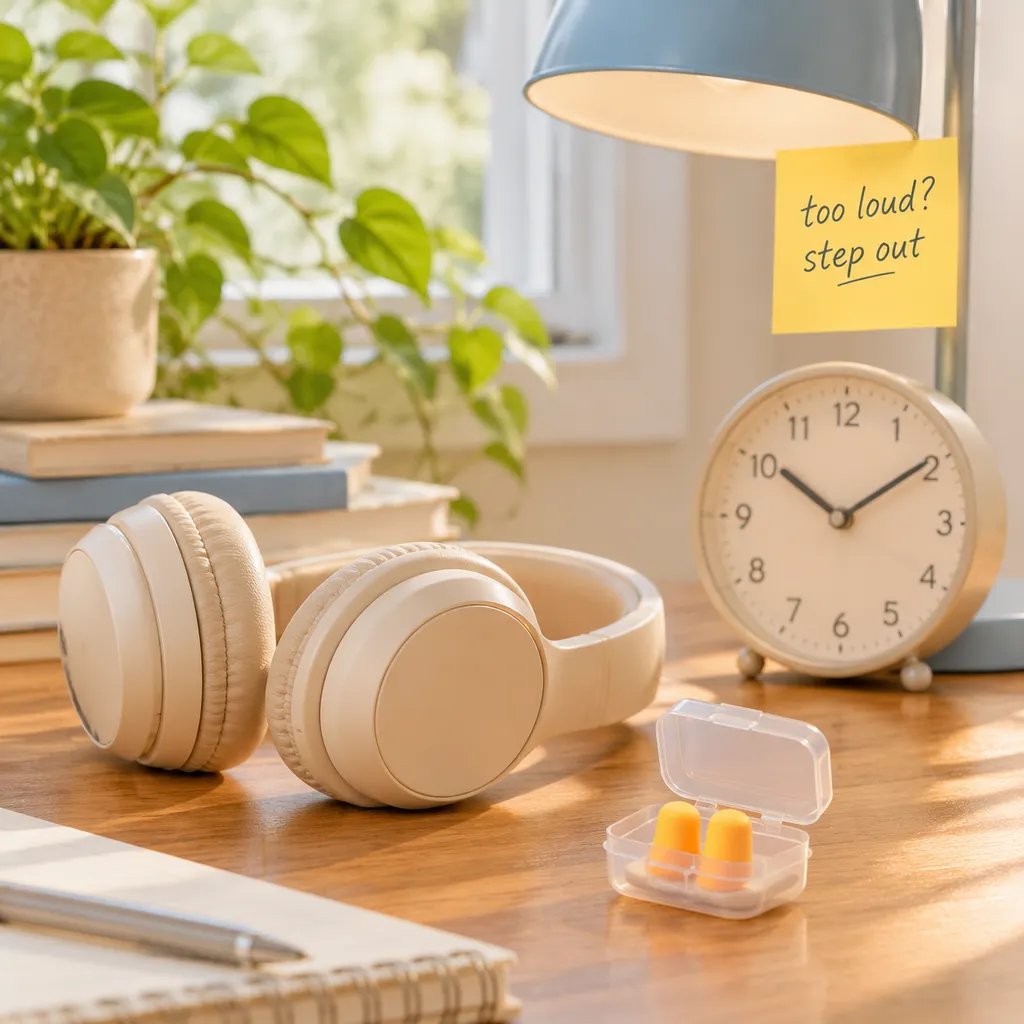
- Control is what helps: headphones, earplugs, a quiet spot, and permission to step out.
One sound takes over the room
You’re trying to work. Someone two desks away is clicking a pen. You can hear the fridge, the traffic, a phone vibrating somewhere. Everyone else seems fine. For you the pen has become the loudest thing in the building, and you’ve read the same email four times.
Sound familiar?
Adults with ADHD often describe sound as hard to filter. Background noise doesn’t stay in the background. People talk about being worn out by open-plan offices, restaurants and family gatherings, getting irritable from repeated small sounds like chewing or tapping, and needing to leave a noisy room. Others need some noise to focus, like music or a café hum, and silence feels too loud.
Maybe you also know these:
- You can’t follow a conversation when another one is happening nearby.
- You turn the music down in the car to find a street.
- A ticking clock keeps you awake.
- After a loud evening, you need a whole quiet day.
If that sounds like you, it’s common with ADHD.
What research says about ADHD and sound
The research bitSound sensitivity stands out
In a Dutch study, 116 adults with ADHD filled in a detailed sensory questionnaire. Compared with the general population, they reported both more over-sensitivity and more under-sensitivity, especially for sound and activity level. It was linked to how strong their ADHD symptoms were, not to autistic traits [1].
The research bitMore ADHD traits, more sensory problems
A UK study of 234 adults from the general population found that the more ADHD traits someone had, the more sensory problems they reported, across all the senses [2].
Being over- and under-sensitive at the same time explains something people often find confusing: you can hate the noise of the office and still need a podcast to wash the dishes. The common thread is control. Sound you choose helps. Sound you can’t escape drains you. The same goes for other senses, like the cold and water of a shower. See why showering feels like a mountain.
Taking back control of sound
Try this
- Carry ear protection. Foam earplugs or loop-style earplugs for loud places, noise-cancelling headphones for work and travel.
- Choose your own noise. Brown noise, rain sounds or the same playlist can cover the random sounds that grab your attention.
- Pick your seat. In meetings and restaurants, sit with your back to the room or away from the speakers and the kitchen.
- Ask for a quiet spot at work. A desk away from walkways, or a room for focused work. Many employers will do this as a reasonable adjustment.
- Plan quiet after loud. Keep the evening or morning after a big event calm.
- Step out on purpose. Five minutes outside during a party is a reset, and nobody minds.
If noise makes it harder to switch between tasks, switching is its own step has more ideas.
When to get it checked
If sounds cause real distress, like rage at chewing or breathing noises, or you’re avoiding places because of noise, it’s worth raising with a doctor. Hearing problems, misophonia and anxiety can play a part too.